

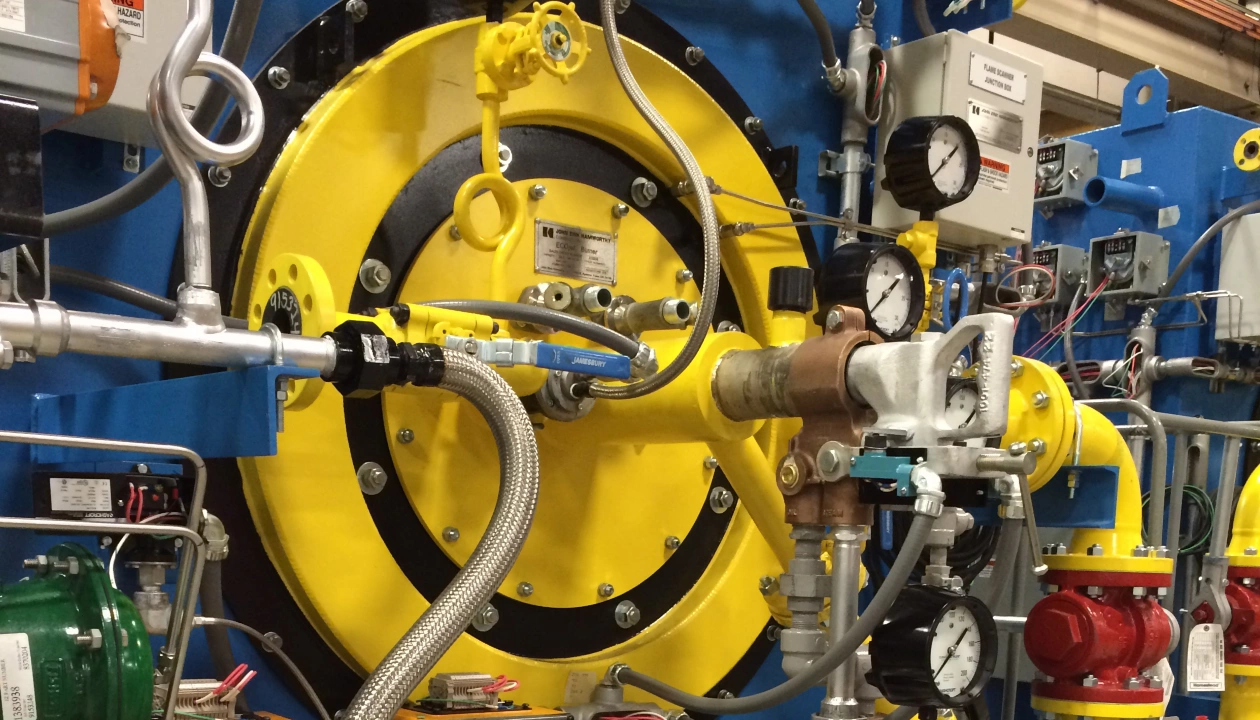

In industrial process heating and boiler room management, the burner is the heart of the system. Whether you are operating a heavy-duty steam generator for a textile mill or managing a district heating plant, burner efficiency directly dictates your operational expenditure, system reliability, and environmental compliance.
With fluctuating fuel prices and stricter emissions regulations, choosing and maintaining the right combustion system is no longer just a procurement box to check—it is a critical engineering strategy.
1. Decoding Burner Efficiency: Where the Energy Goes
True burner efficiency isn’t just about turning fuel into fire; it is about maximizing heat transfer while minimizing losses. In industrial boilers, efficiency is fundamentally challenged by three primary factors:
Excess Air and Combustion Control
To ensure complete combustion and prevent the formation of hazardous carbon monoxide (CO) and soot, burners require more air than the ideal stoichiometric ratio. However, any air that enters the furnace but does not react with the fuel absorbs heat and carries it straight out of the exhaust stack.
- The Sweet Spot: Modern modulating burners equipped with electronic fuel-air ratio control (linkageless systems) and real-time O2 trim loops can maintain excess oxygen levels at an ideal 2% to 3% for gaseous fuels.
- The Cost of Neglect: A mere 1% increase in excess O2 can decrease overall boiler efficiency by roughly 0.5%. Over thousands of operating hours, that “small” deviation translates into massive fuel waste.
Turndown Ratio and Thermal Cycling
A burner’s turndown ratio is the ratio of maximum to minimum fuel input. For example, a burner with a 10:1 turndown ratio can operate at as low as 10% of its full capacity without shutting off.
- High Turndown Advantage: Industrial steam and heating loads fluctuate dramatically throughout the day. A high turndown ratio allows the burner to modulate smoothly to match low demand instead of frequently turning completely off and on.
- The Danger of Short-Cycling: Low-turndown burners are forced to cycle frequently. Every time a burner cycles off, cold air is purged through the furnace to clear out unburned gases, absorbing residual heat from the refractory and boiler tubes and dumping it out the stack. This thermal shock also accelerates mechanical wear on components.
2. The Checklist for Correct Burner Selection
Selecting the perfect burner for an industrial application requires evaluating the complete thermal system as an interconnected loop, rather than looking at the burner as an isolated component.
Combustion Chamber and Flame Geometry Matching
A common pitfall in system design is overlooking furnace dimensions. The burner’s flame profile must fit perfectly within the combustion chamber.
- If the flame is too long or wide, it can directly impinge on the furnace walls or boiler tubes. This causes localized overheating, thermal stress, and premature tube failure.
- Conversely, if the flame is too short, heat transfer through radiation is reduced, forcing the system to rely heavily on convection zones and increasing flue gas temperatures.
Overcoming Boiler Backpressure
Every boiler or process air heater creates resistance to flue gas flow, known as furnace backpressure. The burner’s combustion air fan must be robust enough to overcome this resistance while delivering the volume of air required for complete combustion.
Engineering Note: Always cross-reference the burner’s fan performance curve against the boiler’s backpressure curve across the entire modulation range, not just at peak capacity. A fan that starves at low firing rates leads to unstable combustion and high CO emissions.
Fuel Versatility and Future-Proofing
While natural gas remains a dominant fuel due to its clean combustion profile, supply security and decarbonization goals are driving the industry toward alternative options.
- Dual-Fuel Systems: Selecting a dual-fuel burner (e.g., Gas/Light Oil) ensures operational continuity during gas supply interruptions or peak-shaving periods.
- Hydrogen Readiness: As industrial sectors move away from carbon, investing in burners capable of handling hydrogen blends (H2 mixed with natural gas) or 100% hydrogen is a wise step toward protecting capital assets against future environmental mandates.
3. Advanced Solutions: Beyond the Standard Setup
To truly push the boundaries of industrial energy efficiency, advanced combustion technologies should be integrated into the selection process:
- Flue Gas Recirculation (FGR): By reintroducing a portion of cool flue gas back into the combustion air, peak flame temperatures are lowered, significantly reducing thermal NOx emissions to meet stringent environmental standards.
- O2 / CO Trim Integration: Ambient air temperature, humidity, and barometric pressure change daily. Real-time exhaust gas analysis allows the burner management system (BMS) to micro-adjust air dampers continuously, maintaining peak efficiency regardless of environmental shifts.
- Variable Frequency Drives (VFD) on Fan Motors: Combustion air fans consume significant electricity. Utilizing a VFD to slow down the fan motor at lower firing rates—rather than just choking the air with a damper—saves substantial electrical energy and reduces boiler room noise.
Conclusion: Turning Efficiency into Profit
A combustion system is a long-term investment. While a cheaper, less sophisticated burner might save capital upfront, the ongoing cost of wasted fuel and frequent maintenance will quickly eclipse those initial savings.
By prioritizing precise modulation, robust flame matching, and advanced electronic controls, industrial operations can dramatically lower their carbon footprint, safeguard their thermal equipment, and secure a rapid return on investment. Efficient combustion isn’t just about burning fuel better—it is about powering your processes smarter.